
Solar panels in Warrington
Solar panels in Warrington generate a little less than on the coast but more than most people assume: PVGIS models a 4 kWp south-facing array here at around 3,740 kWh a year. We survey and design systems across the WA1, WA2, WA4 and WA5 districts, from the terraces around Latchford and the town centre to the newer homes at Omega and Chapelford, and size the array to the electricity your household actually uses.




Solar panels in Warrington: what is different here
PVGIS puts a 4 kWp array facing south at 35 degrees in Warrington at about 3,744 kWh a year, with roughly 484 kWh in May and 113 kWh in December. Facing east the same array models at about 2,974 kWh. Inland Warrington comes out a few per cent below the Merseyside coast, which is the difference between a good year and a very good one, not between worth it and not.
We cover the town centre, Woolston, Orford and Padgate in WA1; Longford, Fearnhead and Winwick in WA2; Latchford, Stockton Heath, Appleton and Grappenhall in WA4; and Great Sankey, Penketh, Westbrook and Burtonwood in WA5.
The Omega development and Chapelford Urban Village added thousands of newer homes. Newer roofs are usually in good condition, which keeps the survey simple, but some new-build estates carry covenants or management-company rules on external changes, so it is worth checking your deeds before you commit.
Victorian and Edwardian terraces around the town centre, Latchford and off Wilderspool Causeway have roofs that follow the street, often east and west. A split array across both slopes spreads generation across morning and late afternoon.
Parts of Croft, Culcheth, Winwick and Daresbury sit off the mains gas grid. Homes heated by oil, LPG or electricity stand to gain more from solar than gas-heated ones, especially alongside a heat pump.
Warrington Borough Council declared a climate emergency in 2019, with council operations targeted to be carbon neutral by 2030 and the whole borough net zero by 2041.
Sizing an array for a Warrington home
The most common mistake in solar is sizing to the roof rather than the household. A three-bed semi in Great Sankey that uses around 3,000 kWh a year does not need the biggest array its roof will take; most of the surplus would be exported at a lower rate than you pay to import. We start from your bills, add anything that will change demand in the next few years, such as an electric car or a heat pump, and then fit the array to the roof. PVGIS gives us the modelled output for your orientation and pitch, and you get that figure in writing. The wider method is on our solar PV page.
New-build, older terrace, or village house
Warrington's housing ranges more widely than most towns. Newer estates at Omega, Chapelford and around Great Sankey usually have sound modern roof coverings and straightforward loft access for cable runs, though some have estate rules worth checking. Older terraces around the centre and Latchford bring narrower roofs, chimney stacks and the east-west question. Larger houses in Appleton, Grappenhall and Stockton Heath often have the space for a bigger array, which can take total generation above 3.68 kW per phase and require the network operator's approval before connection under G99. We handle that application.
Batteries and winter
A Warrington array makes about four times as much in May as in December. In summer a battery stores the midday surplus for the evening; in winter it can charge from a cheap overnight tariff and carry the expensive peak, so it keeps earning when the panels are not. We fit the Fox ESS range; see battery storage for how sizing works. Solar and domestic batteries carry 0 per cent VAT until 31 March 2027.
Heating as well as electricity
Solar on its own does nothing for a gas bill. For gas-heated homes it cuts the electricity side, and if there is a hot water cylinder a diverter can heat water with the surplus. For the off-gas villages on the edge of the borough, solar alongside a heat pump is usually the stronger combination. We install and service boilers across Warrington too, so we have no reason to push one answer; our Warrington area guide covers the boiler side.
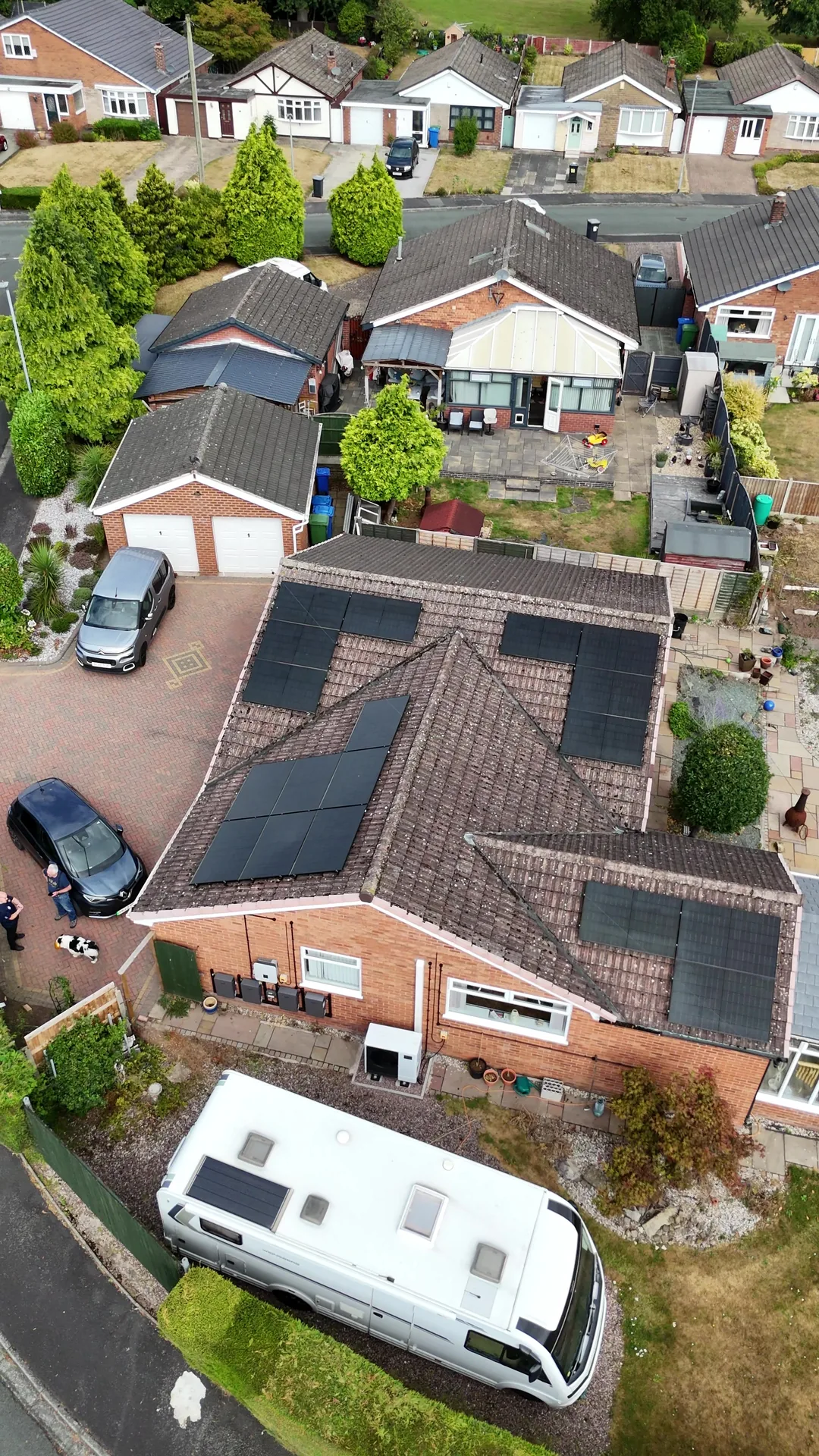
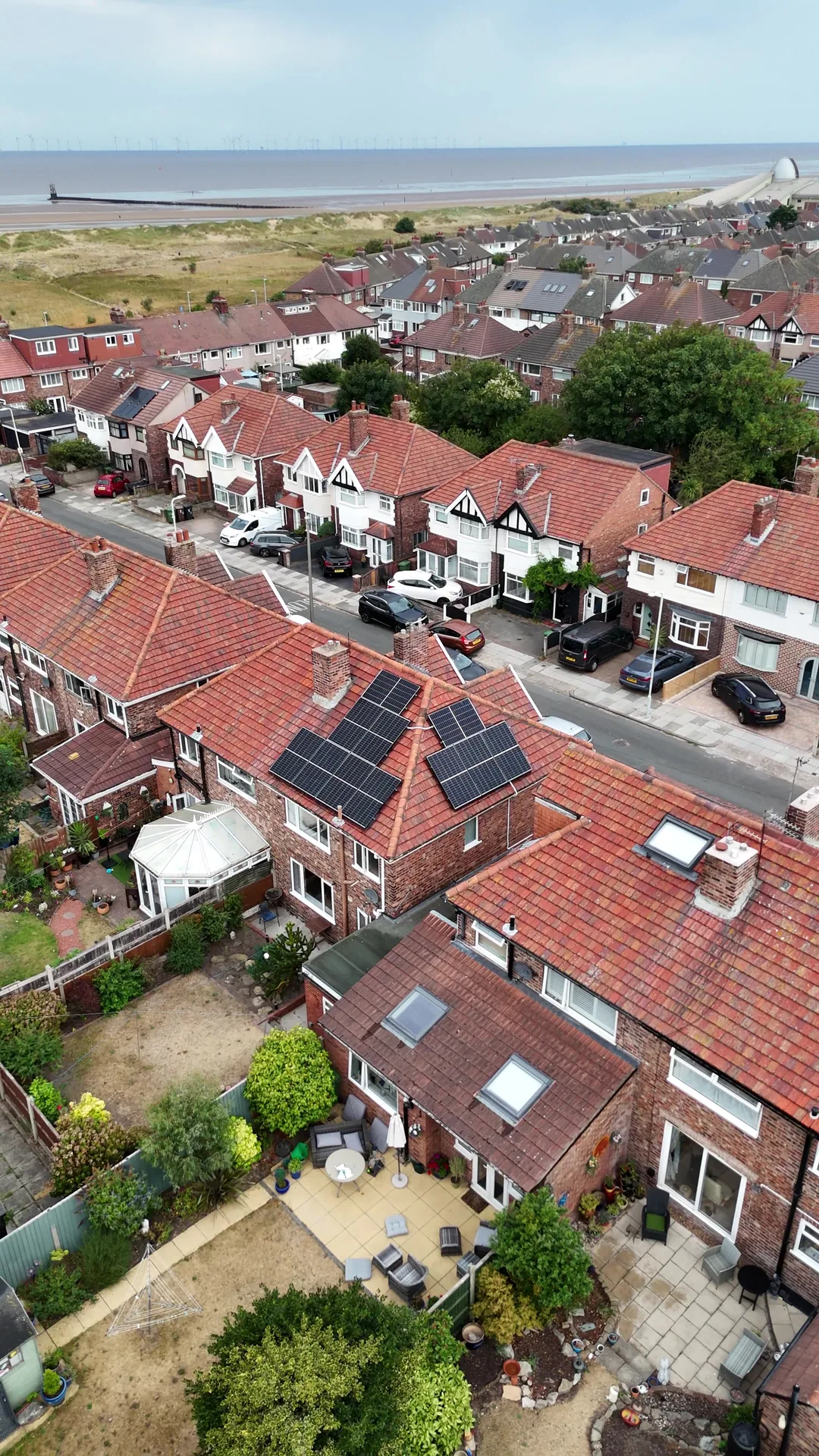
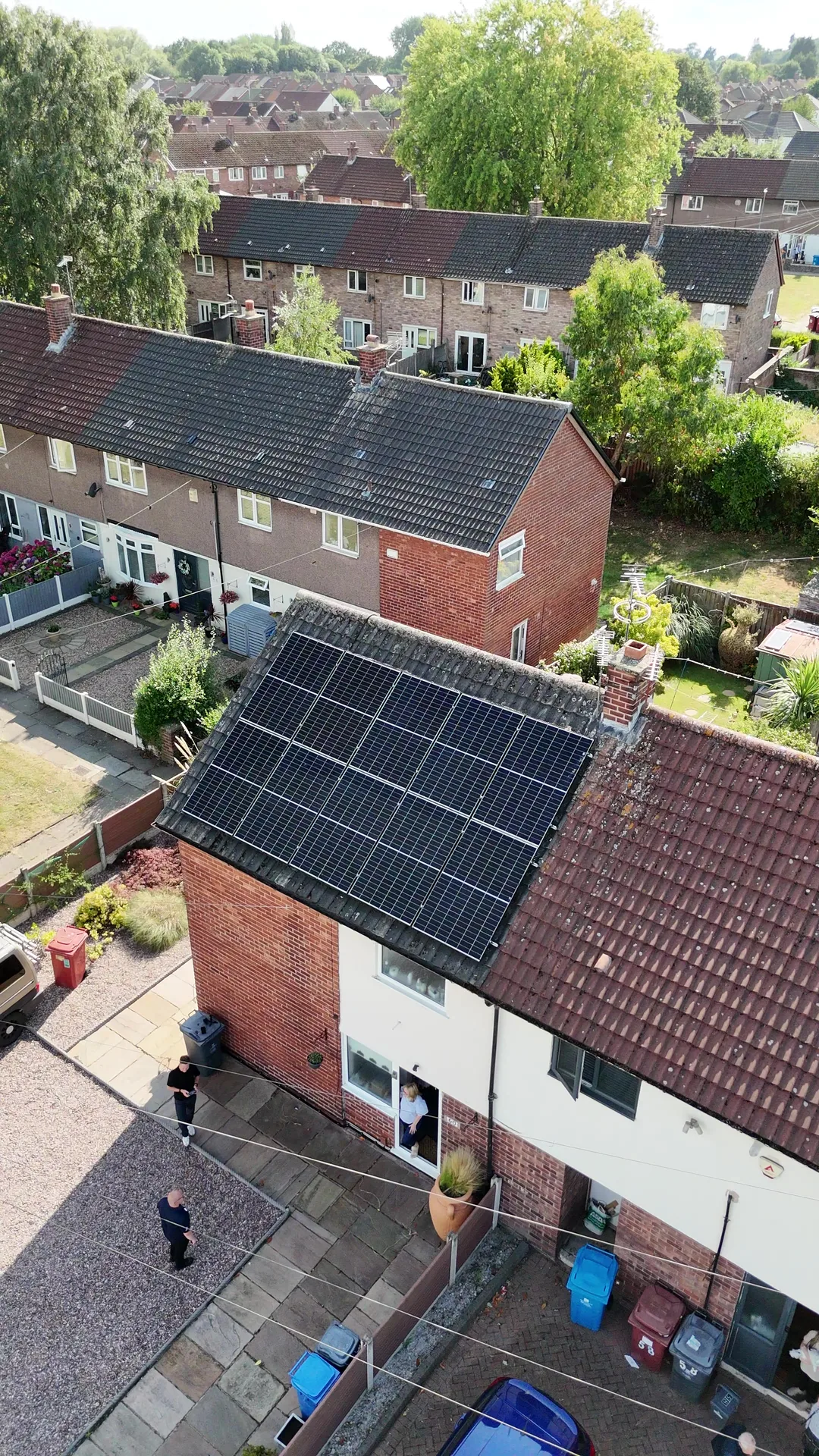
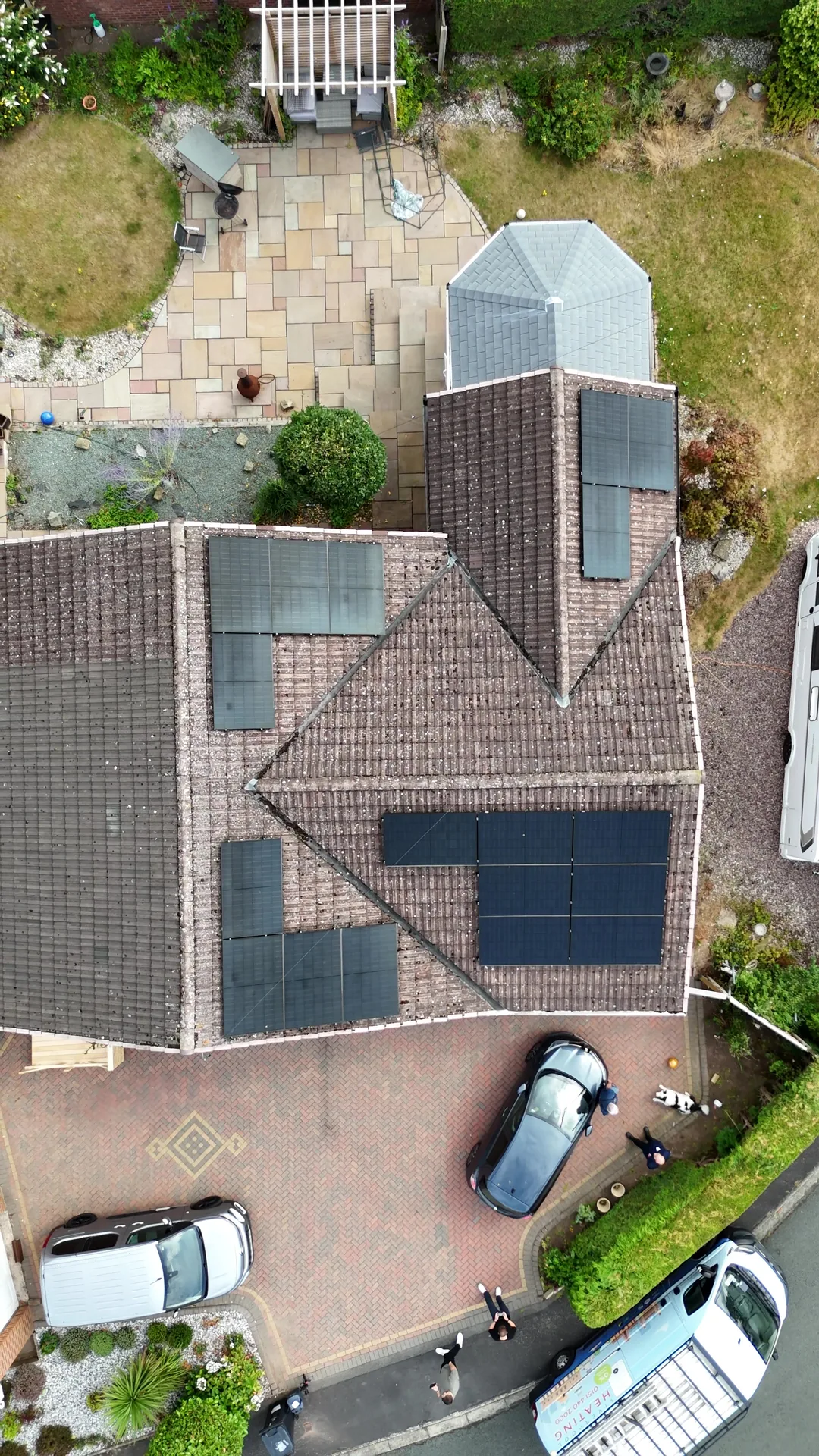
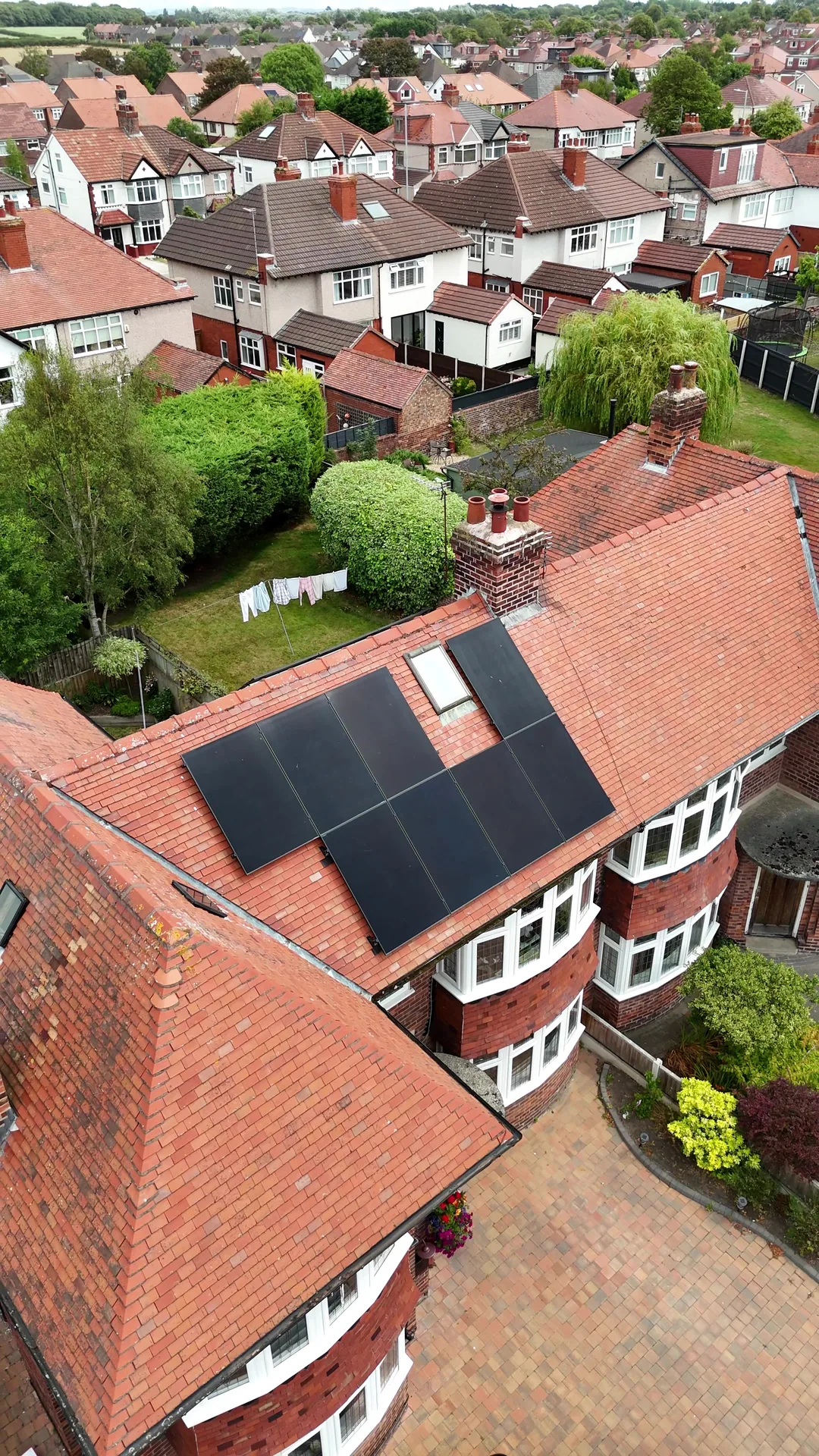
Recent solar installs, from the air
Liverpool Heating solar jobs filmed by drone this summer. Real roofs, real panels, no stock photos.
Read about the four jobs →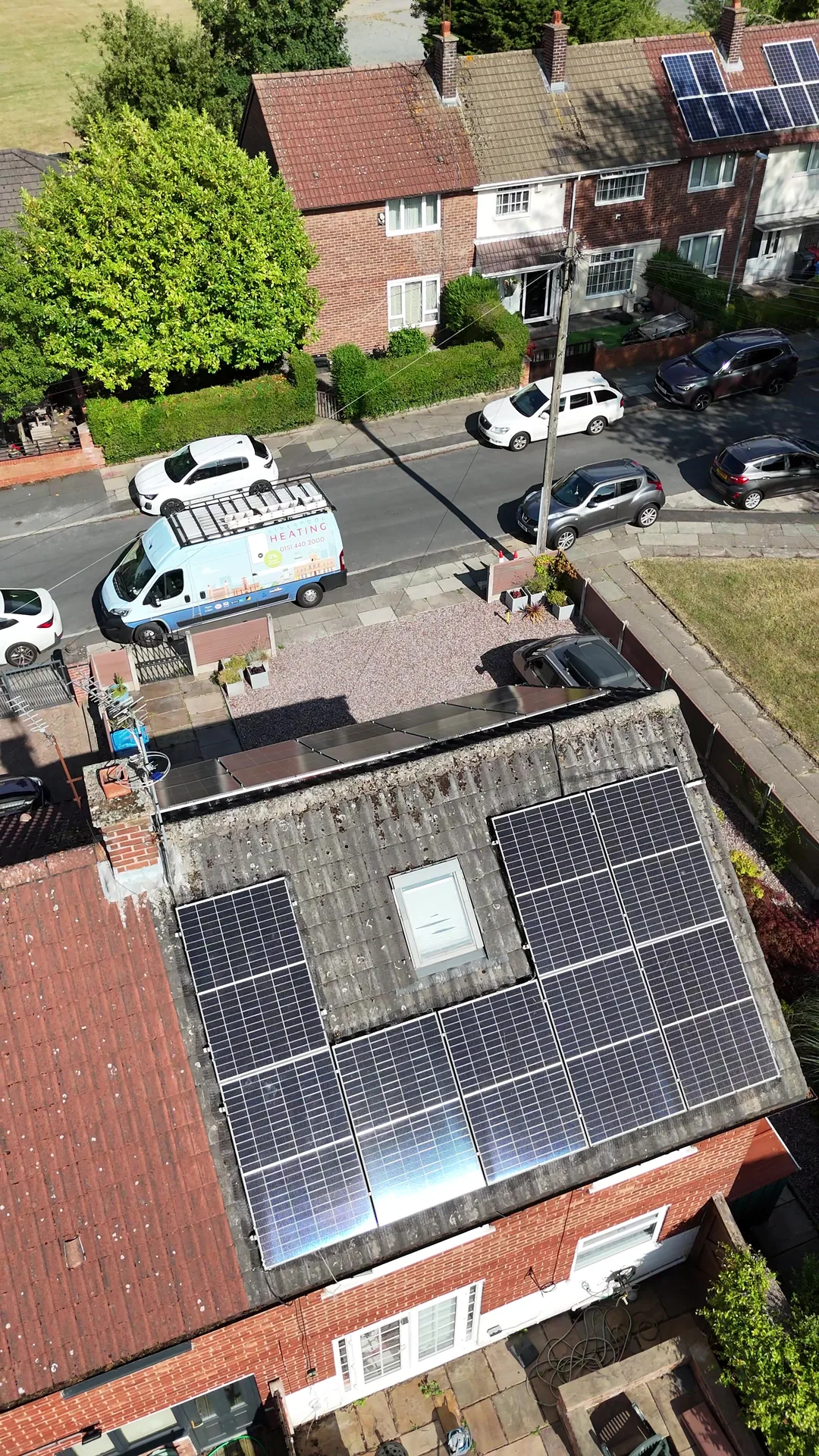
Common questions
I live on a new-build estate in Warrington. Can I fit solar panels?
Usually yes. Roof-mounted panels on a house normally fall under permitted development. Some new-build estates have covenants or management-company rules on external changes, so check your deeds or ask the management company before you commit. Newer roofs are generally in good condition, which keeps the installation straightforward.
How much will panels generate in Warrington?
PVGIS models a 4 kWp array facing south at a 35-degree pitch in Warrington at about 3,744 kWh a year, and an east-facing one at about 2,974 kWh. Shading, pitch and the exact orientation of your roof change that, so we model your own roof and put the figure in writing.
We are off the gas grid in Culcheth. Is solar a good idea?
Often a better idea than for a gas-heated home, because electricity is a bigger share of your energy use. If you run oil or LPG, it is also worth pricing an air source heat pump at the same time, since solar and a heat pump work well together. We will talk through both honestly.
A free solar survey for your Warrington home
Your roof measured, the output modelled and the price in writing. No pressure.
Also in Warrington: boiler installation, boiler service & repair. Solar panels elsewhere: Wirral, St Helens, Southport and Liverpool.