Skip to content
★★★★★ 5.0 · 153 Google reviews Gas Safe 541116 · Worcester Accredited Call 0151 440 2000
Summer 2026 · filmed by drone

Four jobs, seen from above

Our videographer flew over four finished installs in July and August. No stock photos, no render — these are Merseyside roofs with our systems on them, and we've written up exactly what you can see.

28 July 2026

Solar on four roof faces, and a heat pump

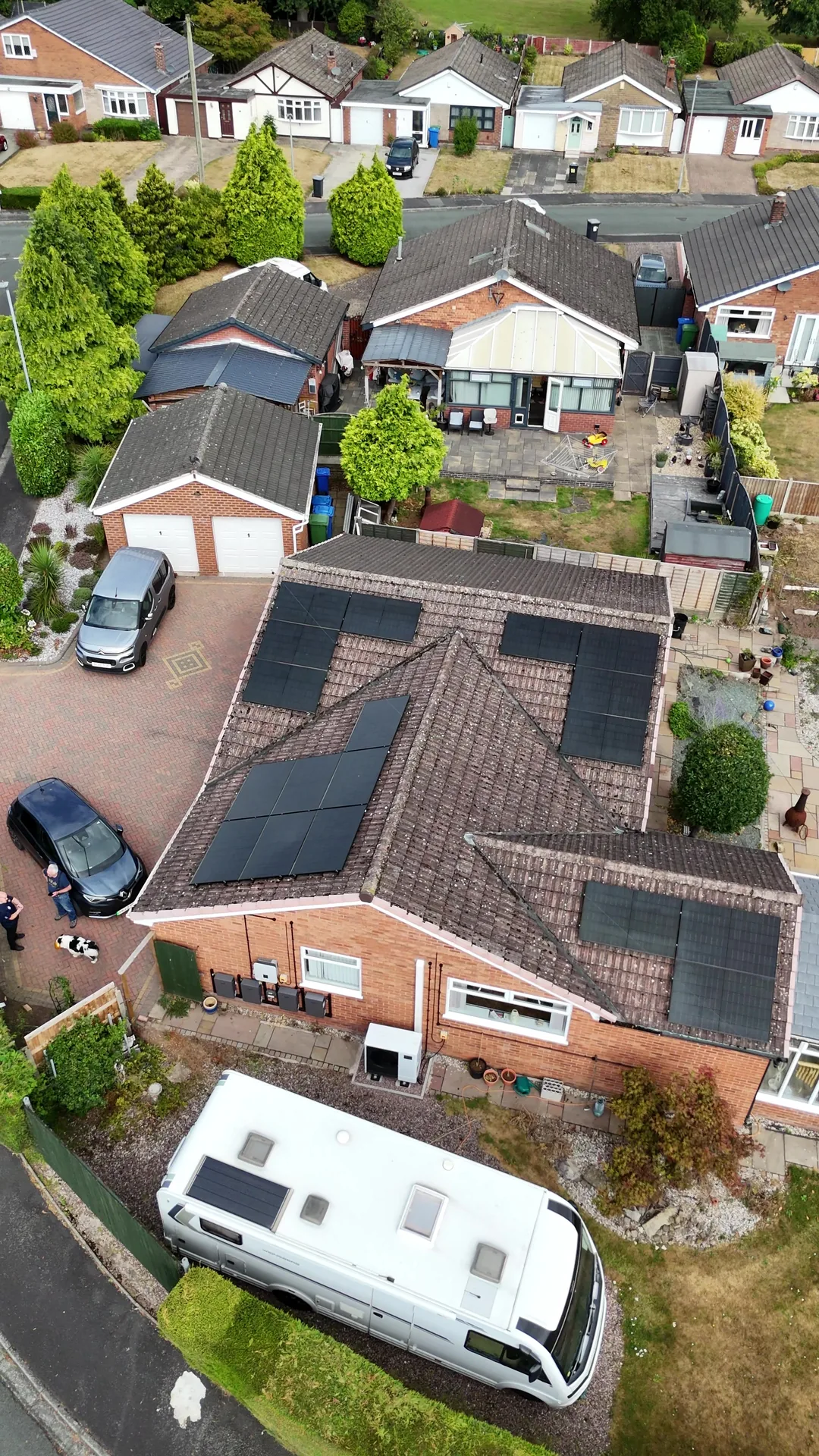
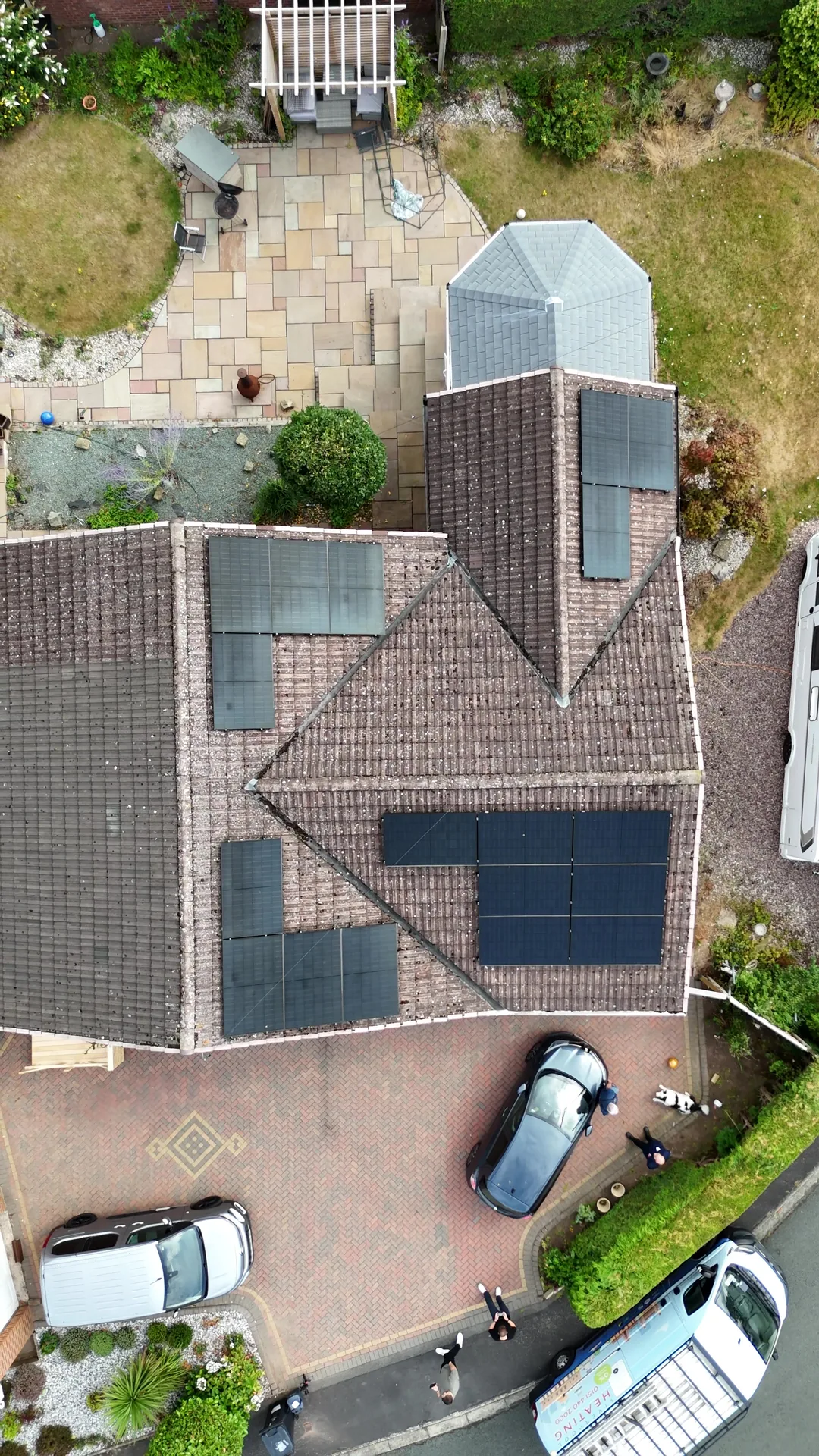
Detached bungalow with conservatory, edge of a housing estate with fields behind

A bungalow roof is mostly hip and short slope, which is why this one carries panels on four separate faces rather than one big run. The array on the rear slope is the largest. On the side wall, by the meter cupboards, sits the outdoor unit of an air source heat pump — so this home now generates its own electricity and heats with it.

What you can see

  • Panels across four roof faces of a hipped bungalow roof
  • Largest run on the rear slope, smaller arrays either side of the conservatory
  • Air source heat pump outdoor unit on the side wall
  • All-black panels on every array
28 July 2026

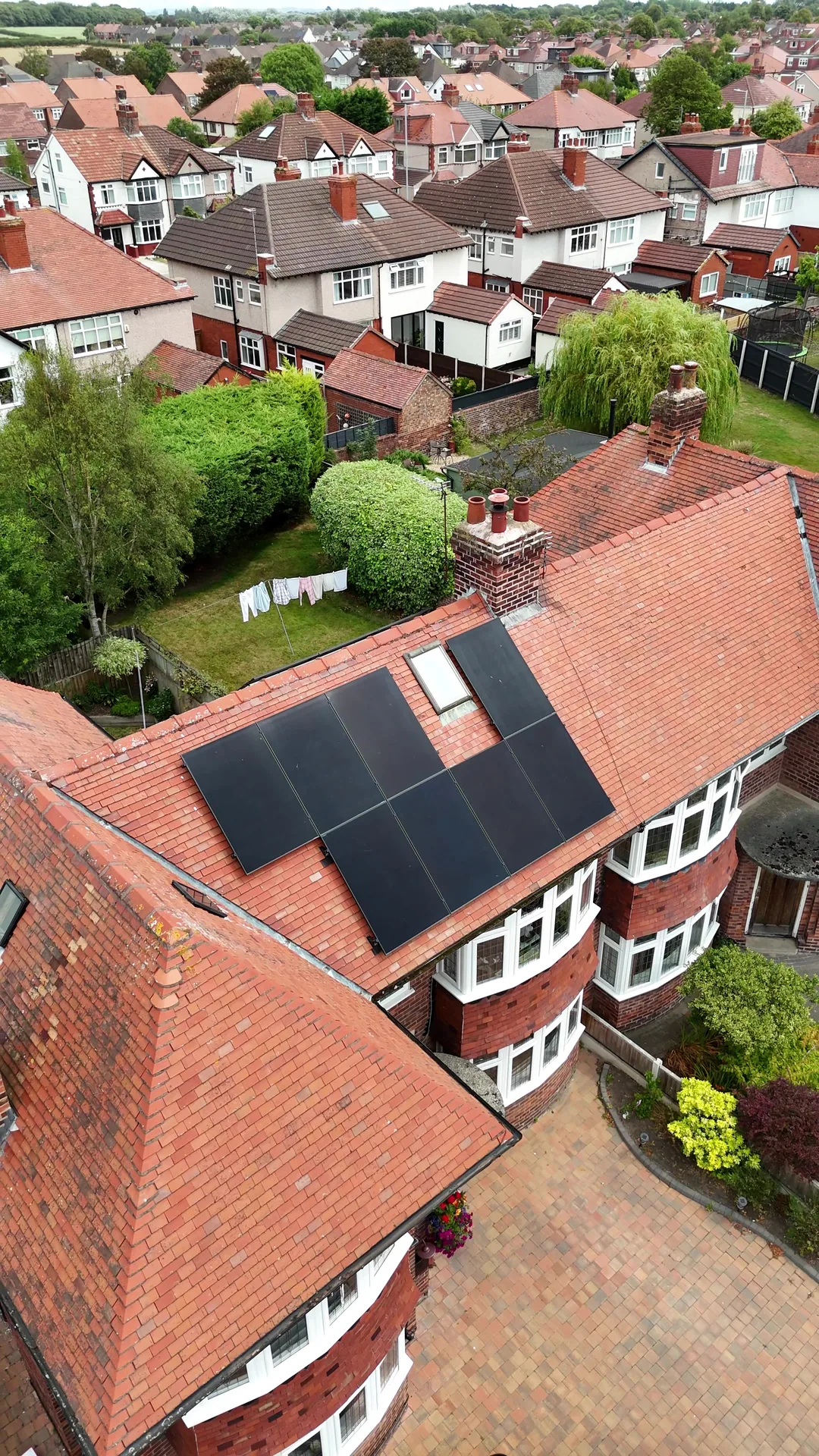
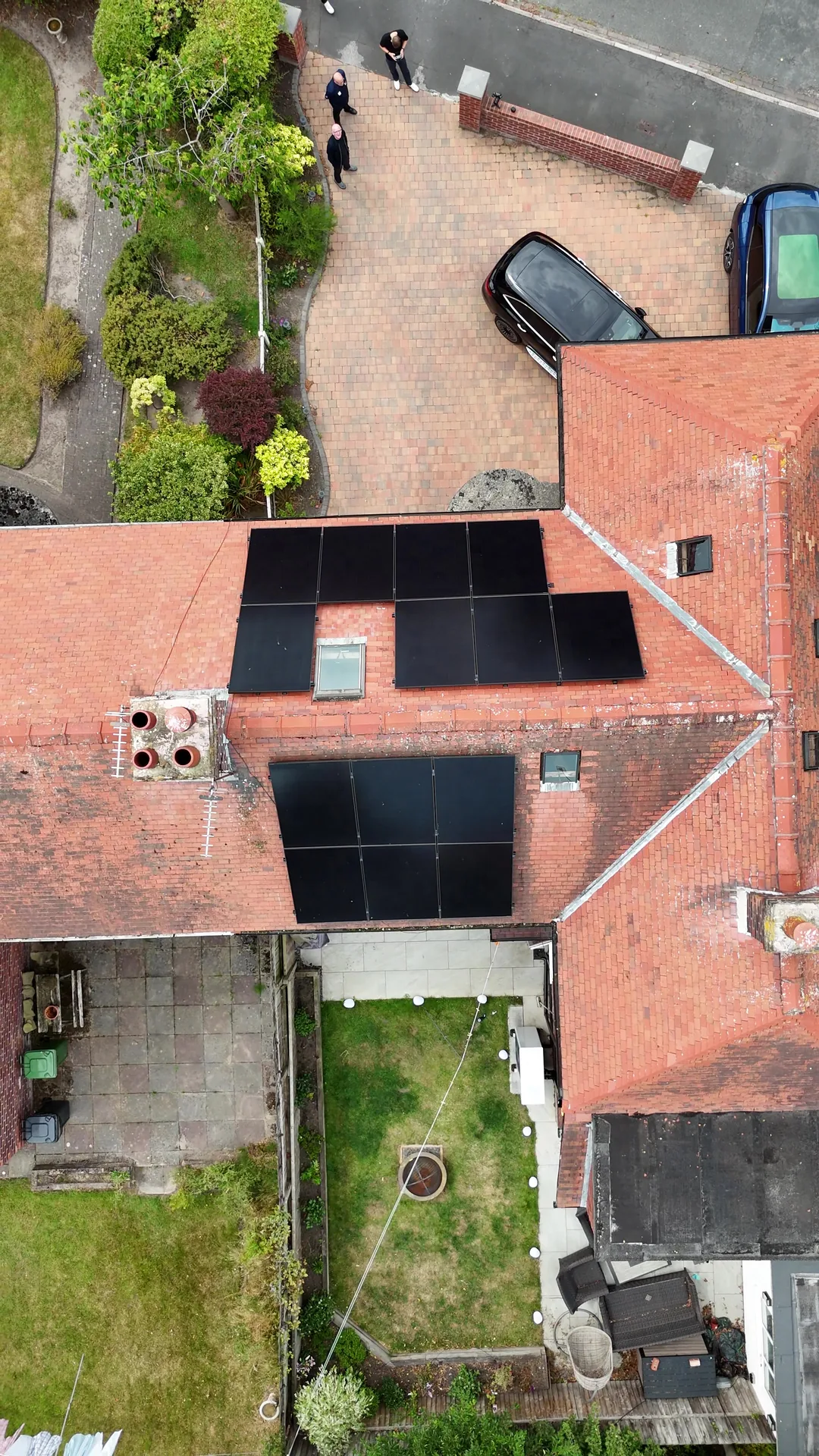
14 panels on an Edwardian semi

Edwardian semi-detached with double bay windows and a rooflight

Eight panels on the front slope, worked around an existing rooflight, and six on the rear. Older roofs like this one have original timbers and heavy clay tiles, so the survey checks the structure before anything is ordered — and the result is an array that follows the roof rather than fighting it.

What you can see

  • 8 panels on the front slope, arranged around a rooflight
  • 6 panels on the rear slope
  • Original clay tiles and two chimney stacks retained
  • Bay-fronted Edwardian semi in a mature suburban street
3 August 2026

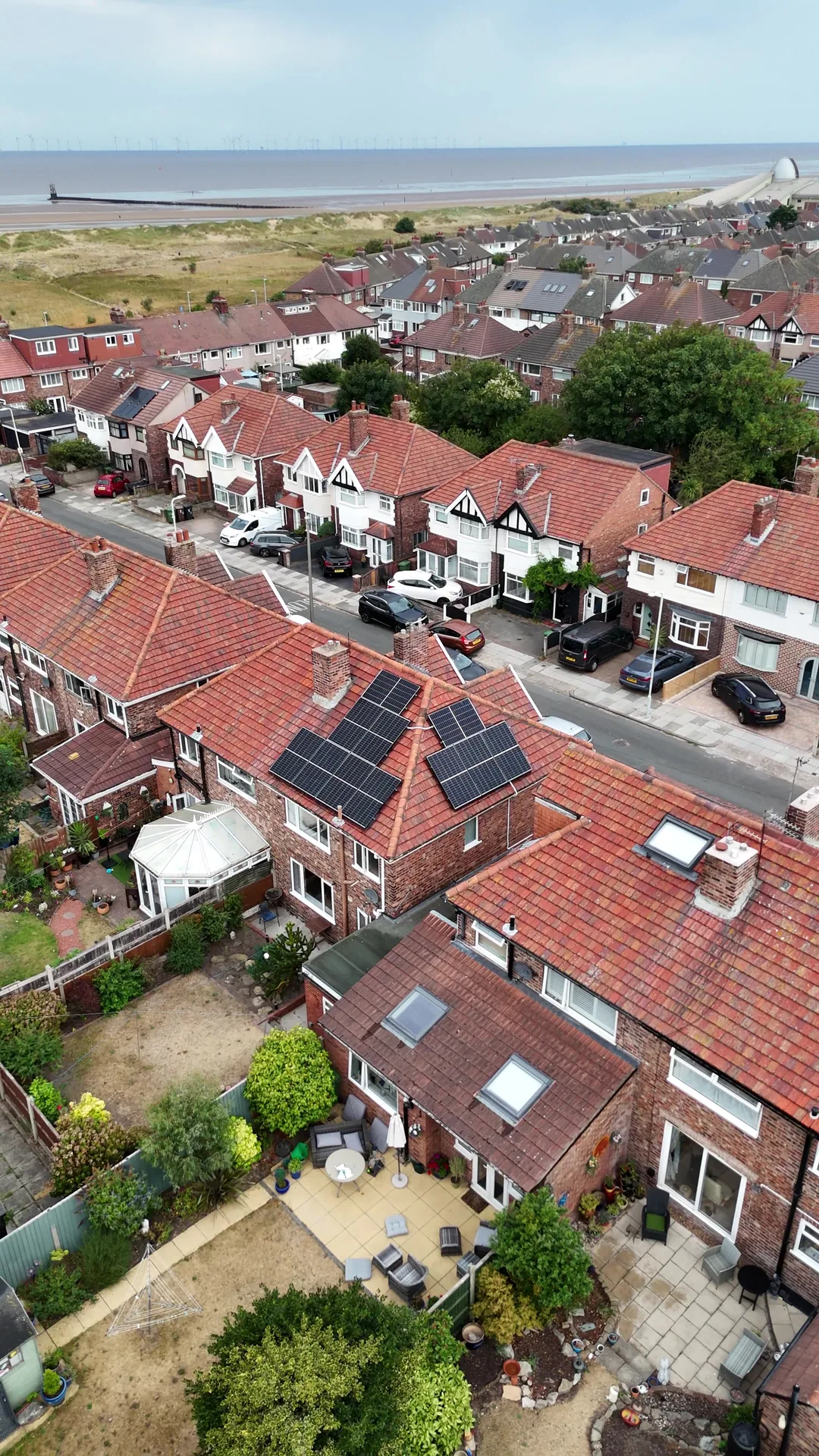
Two arrays on a coastal semi

Bay-fronted semi-detached, a few streets back from the beach

Salt air and wind are the two things a coastal roof throws at a solar system, and both are handled at the fixings rather than the panels. This semi has one array on the main roof and a second on the hip, with the offshore wind farm visible on the horizon behind it — a fair reminder of where this part of the coast gets its electricity.

What you can see

  • Two separate arrays: main roof slope and hip end
  • Semi-detached with a rear conservatory
  • Offshore wind farm on the horizon, sea and beach behind the estate
  • Neighbouring roofs in the same street already carry panels
28 July 2026

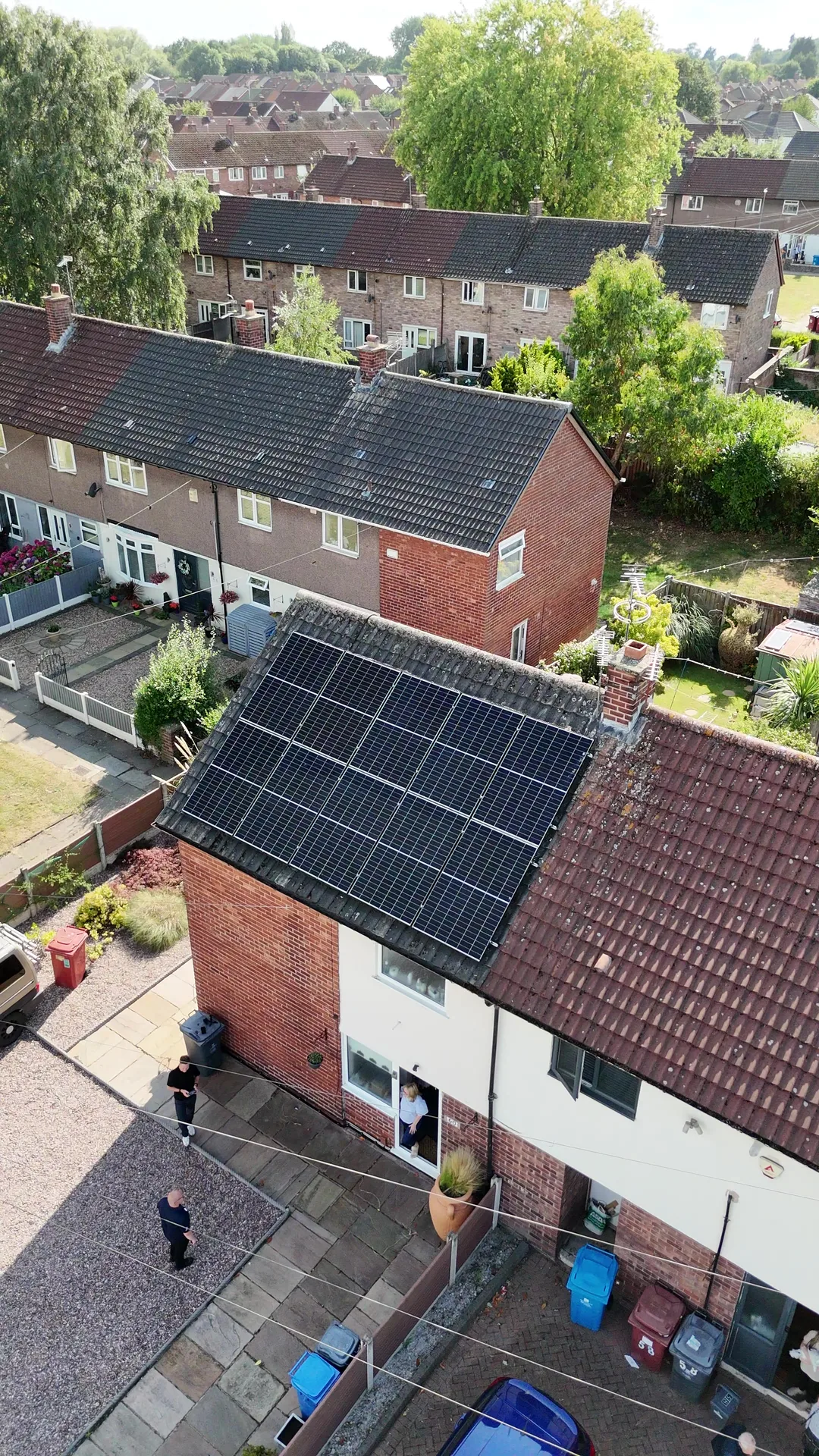
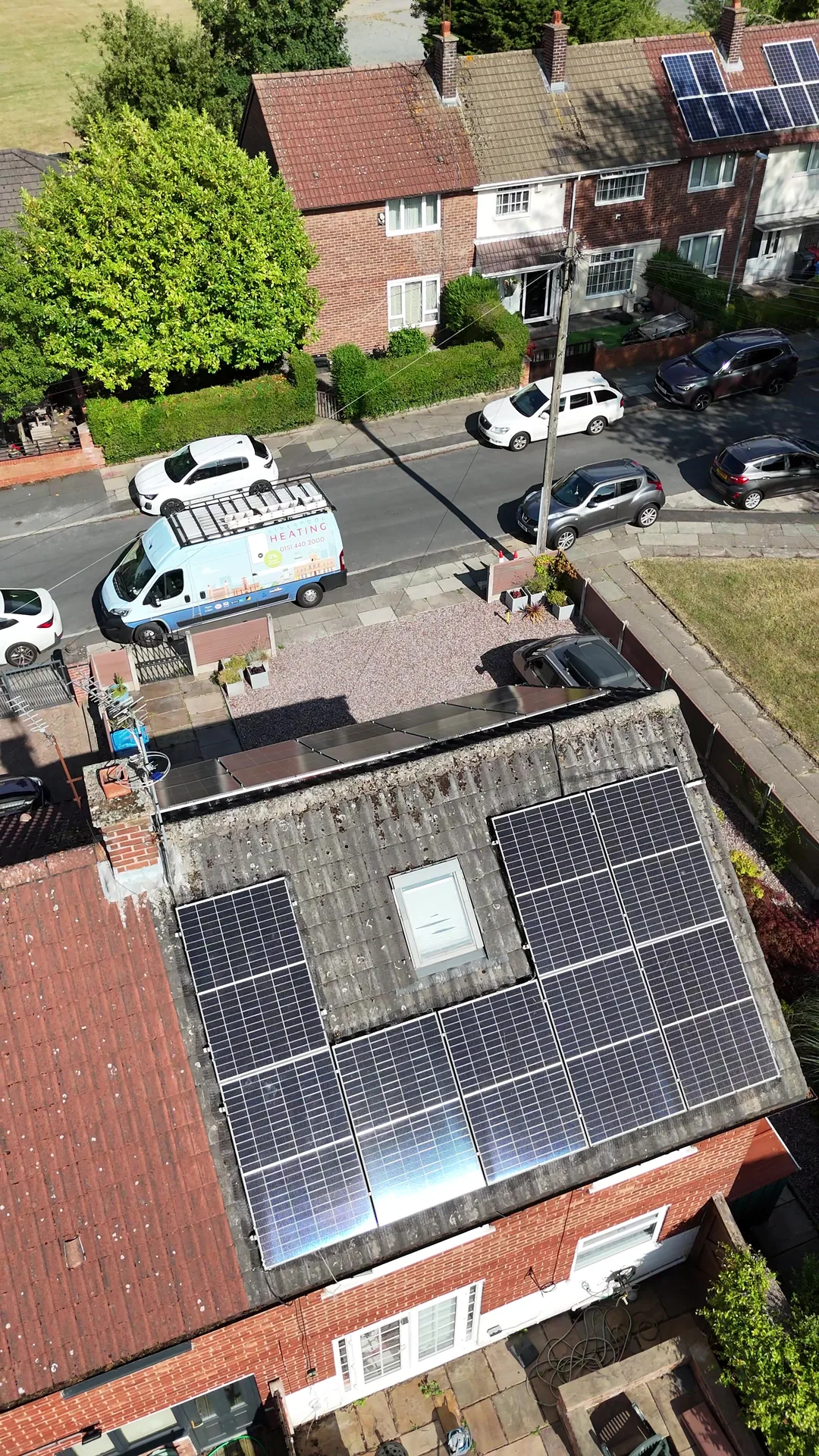
16 panels on an end-terrace front slope

End-of-terrace house on a housing estate

The simplest kind of roof for solar: one big uninterrupted slope. Sixteen panels in a four-by-four block fill the front, with a second array on the rear slope. The van is in shot because our engineer was still on site when the drone went up.

What you can see

  • 16 panels in a 4 × 4 block on the front slope
  • Second array on the rear slope
  • End-of-terrace with a side path and rear garden
  • Liverpool Heating van parked outside during the shoot

Why these pages say “what you can see”

Because that is all we are prepared to claim from a photograph. System sizes, batteries and what the owners think of it all are for each customer to share, not for us to guess — and when they do, it goes here. In the meantime the roofs speak for themselves. If yours looks like one of them, the solar page covers what a survey checks, and battery storage covers what happens to the electricity once it is made.

Yours next?

A free survey tells you what your roof can carry and what it would generate — before anyone quotes.