
Solar panels in St Helens
Solar panels in St Helens suit the borough's housing better than most: it is a semi-detached borough, and a semi's roof is close to the ideal canvas. PVGIS models a 4 kWp south-facing array in St Helens at around 3,750 kWh a year. We survey roofs from Eccleston and Windle to Haydock, Rainford and Newton-le-Willows, and design each system around the household's own electricity use.




Solar panels in St Helens: what is different here
PVGIS puts a 4 kWp array facing south at 35 degrees in St Helens at about 3,748 kWh a year: roughly 487 kWh in May and 112 kWh in December. Facing east, about 2,962 kWh. The figures are the European Commission's model for this location, with standard system losses included.
The borough's Local Plan evidence records its housing as 46% semi-detached, 30% terraced, 14% detached and 9% flats. A typical semi's main roof slope takes eight to fourteen panels, and the bay-fronted semis of Eccleston, Windle and Dentons Green often have a clean, unshaded rear slope.
Friends of the Earth's reading of EPC records puts 54% of St Helens homes at band D or worse. Solar PV is counted in an EPC assessment, so for a lot of local homes it is one of the more direct ways to move the rating.
Around 65% of the borough is Green Belt, and parts of Rainford, Crank, Bold Heath and the lanes towards Billinge have no mains gas. Homes there heated by oil, LPG or electricity gain the most from generating their own electricity.
St Helens Borough Council declared a climate emergency in 2019 and works to a net zero carbon borough by 2040, with a Climate Action Plan of 134 activities.
Float glass was invented in St Helens by Sir Alastair Pilkington in 1952. Every solar panel is faced with glass, which is a pleasing piece of local history and also a practical point: the glass is what keeps panels low-maintenance, needing little more than overhanging growth kept clear.
Designing for a St Helens semi
With nearly half the borough's homes semi-detached, the semi is the roof we design for most. The typical layout is a main slope facing the garden and a hip or gable to the side, with a chimney stack that shades a corner of the array for part of the day. We measure that shading rather than ignore it, and on a roof with a stubborn stack or a neighbouring tree we look at power optimisers so one shaded panel does not pull down the rest. PVGIS gives us the modelled annual and monthly output for your exact orientation and pitch, and that goes in your quote in writing. The wider picture is on our solar PV page.
Terraces, the older estates and the villages
Terraced streets around Parr, Sutton and Thatto Heath have smaller roofs and often east-west slopes, which still give around three-quarters of the south-facing output and spread it across the day. Larger detached houses in Eccleston Park, Windle and Rainhill can take a bigger array; if total generation goes over 3.68 kW per phase, solar and battery inverters counted together, the network operator must approve the connection in advance under G99, and we handle that application. If you rent your home, panels are your landlord's or housing association's decision rather than yours.
Batteries and making it pay through winter
Without storage, much of what a St Helens array generates at midday goes to the grid. A battery holds it for the evening, and through the winter, when the panels make about a quarter of their May output, it can charge from a cheap overnight tariff instead. We fit the Fox ESS range; battery storage explains how we size it. Solar and domestic batteries are zero-rated for VAT until 31 March 2027.
Off-gas homes in Rainford, Crank and Billinge
Where a village house runs on oil, LPG or electric heating, solar usually pays back faster because electricity is a bigger share of the energy bill. It pairs naturally with an air source heat pump, which turns each unit of electricity into roughly three of heat. For gas-heated homes we will tell you plainly that panels cut the electricity bill and not the gas one. We also fit and service boilers across the borough; see our St Helens area guide.
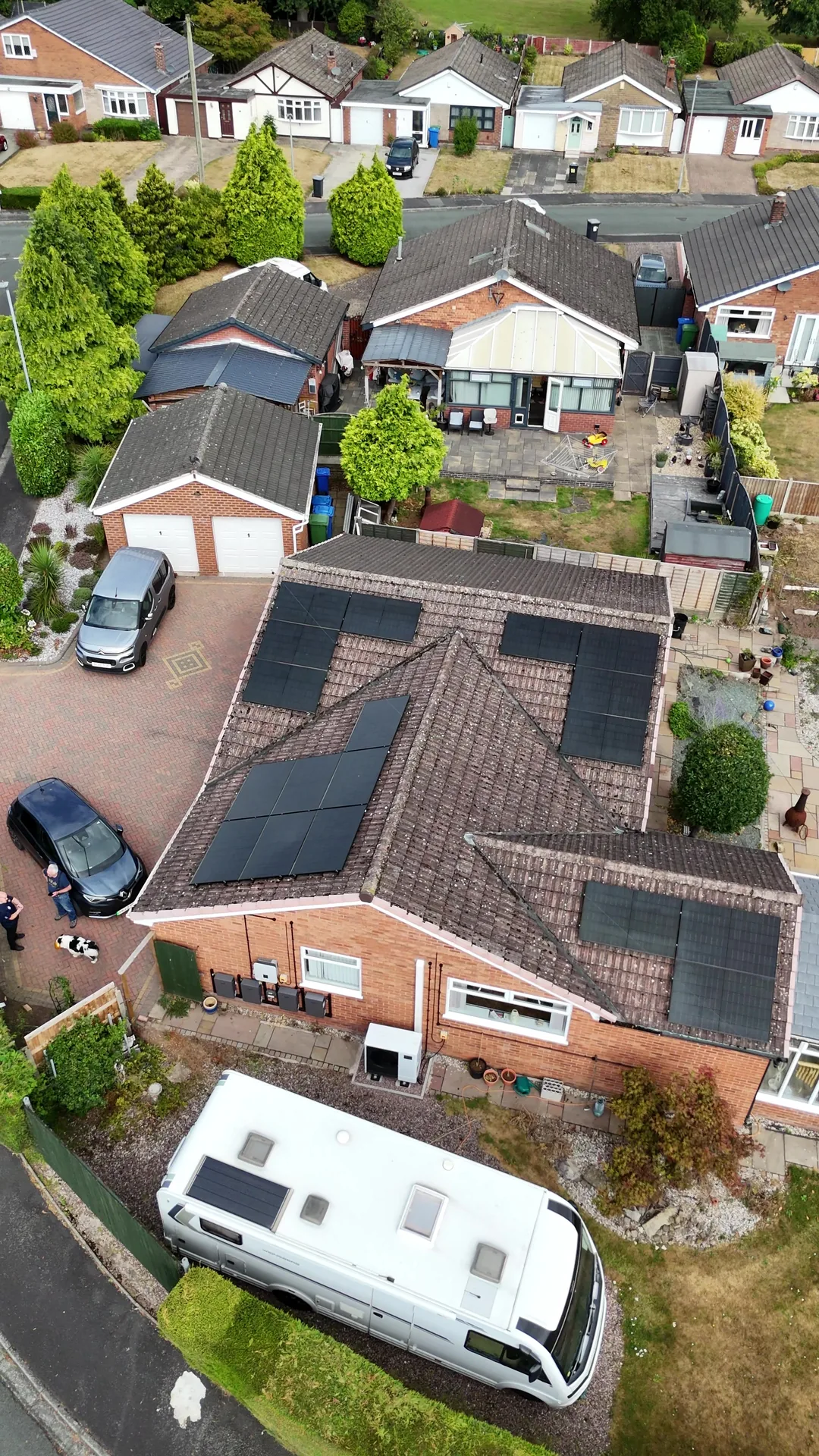
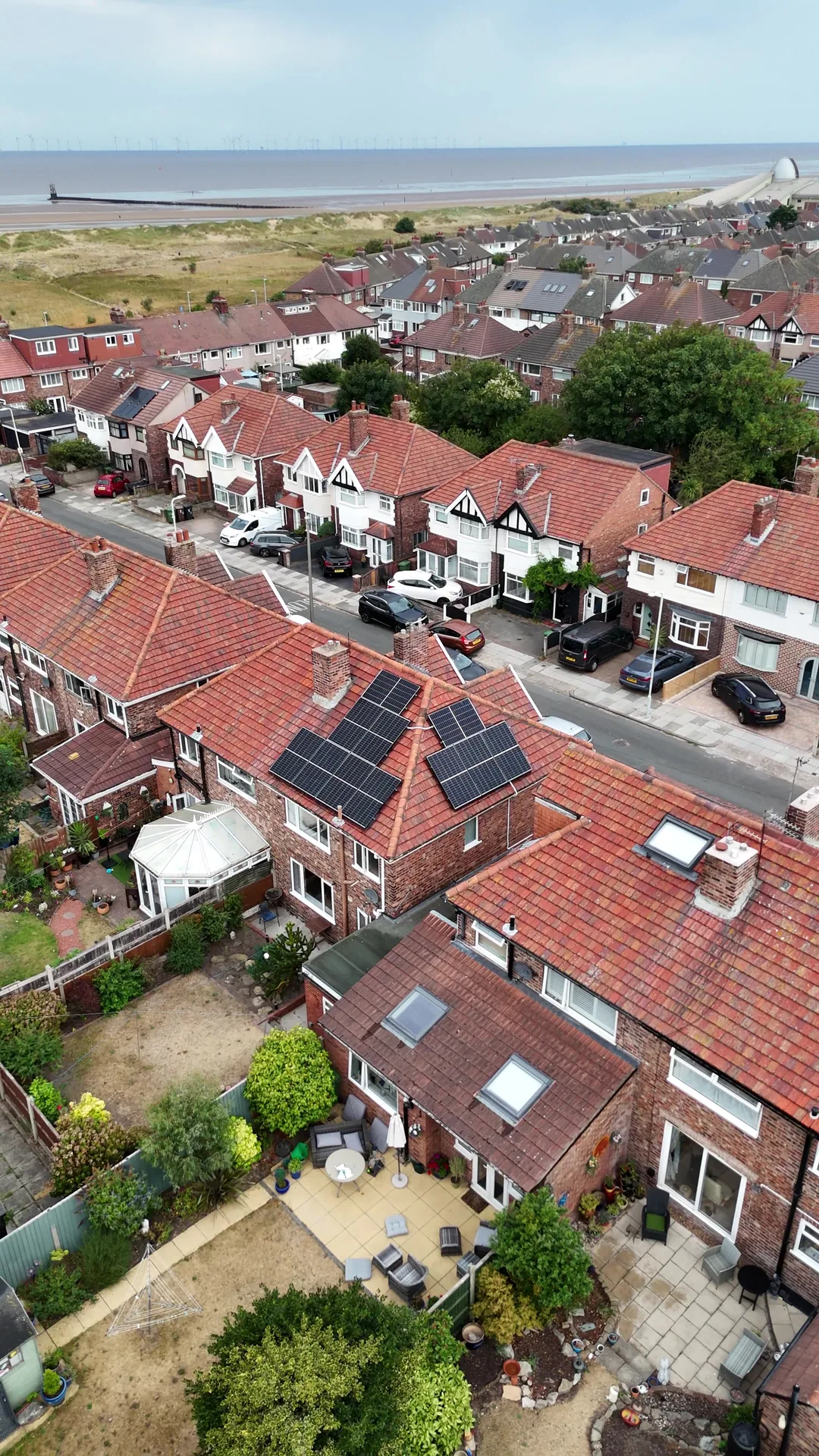
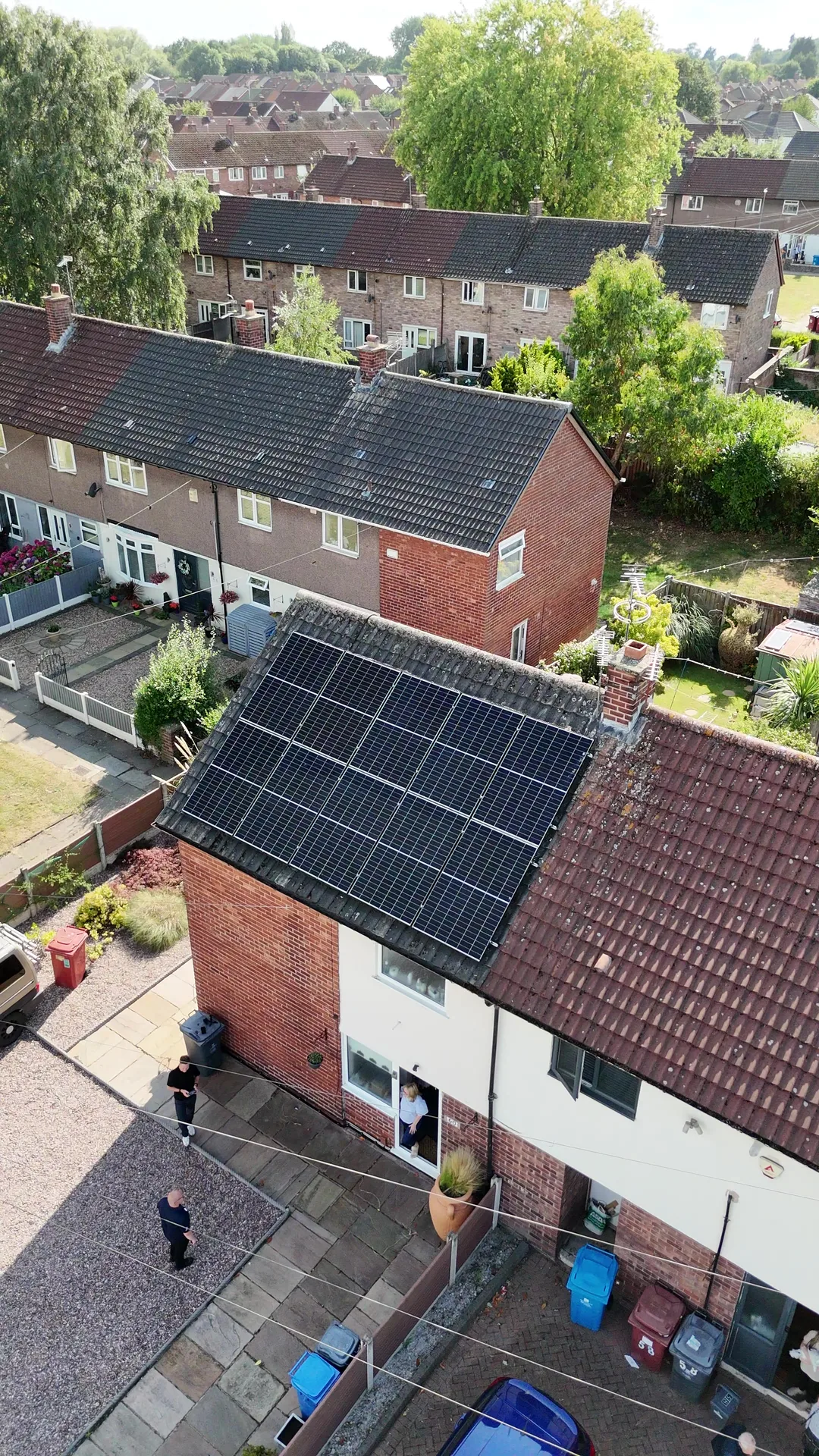
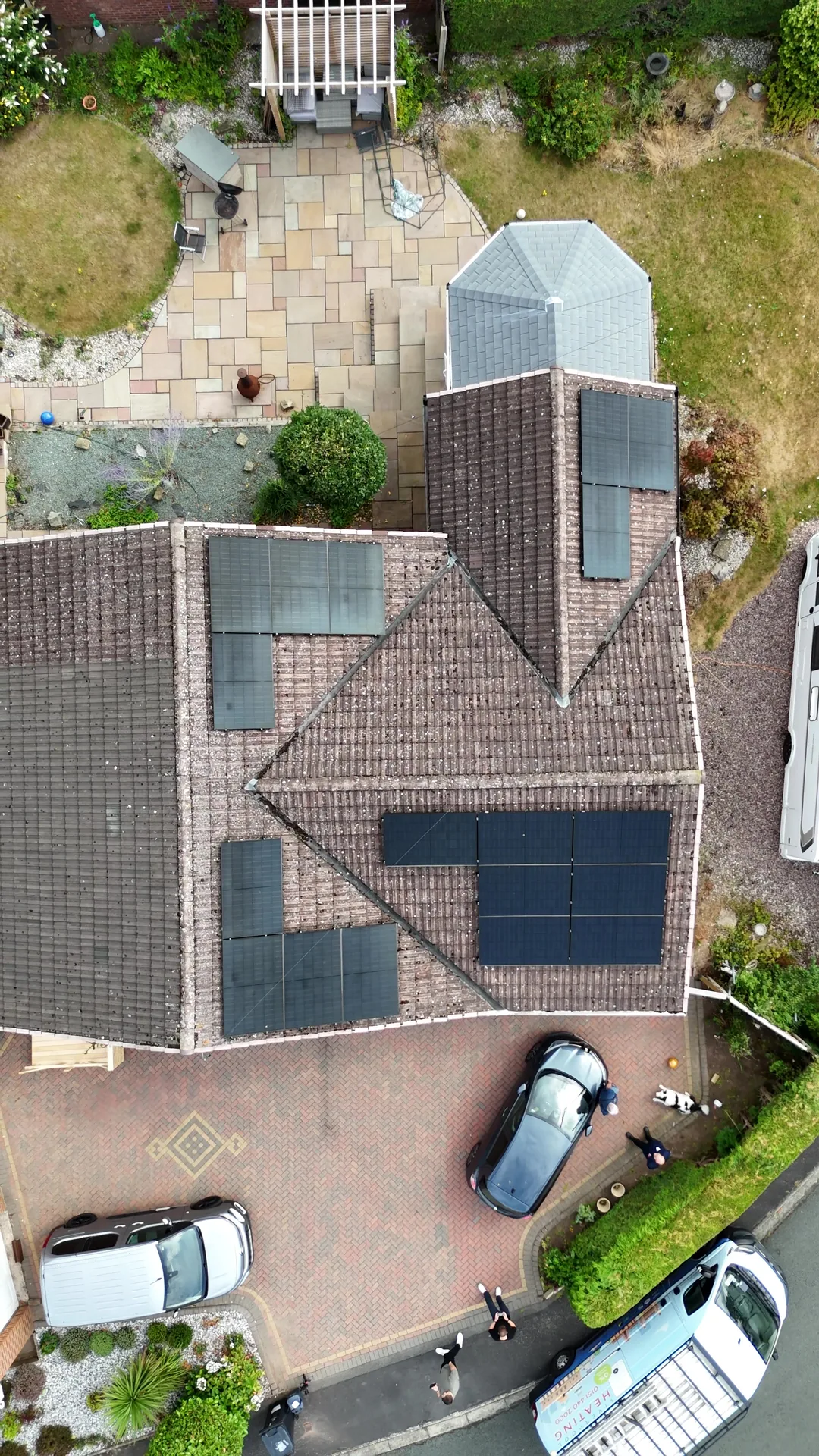
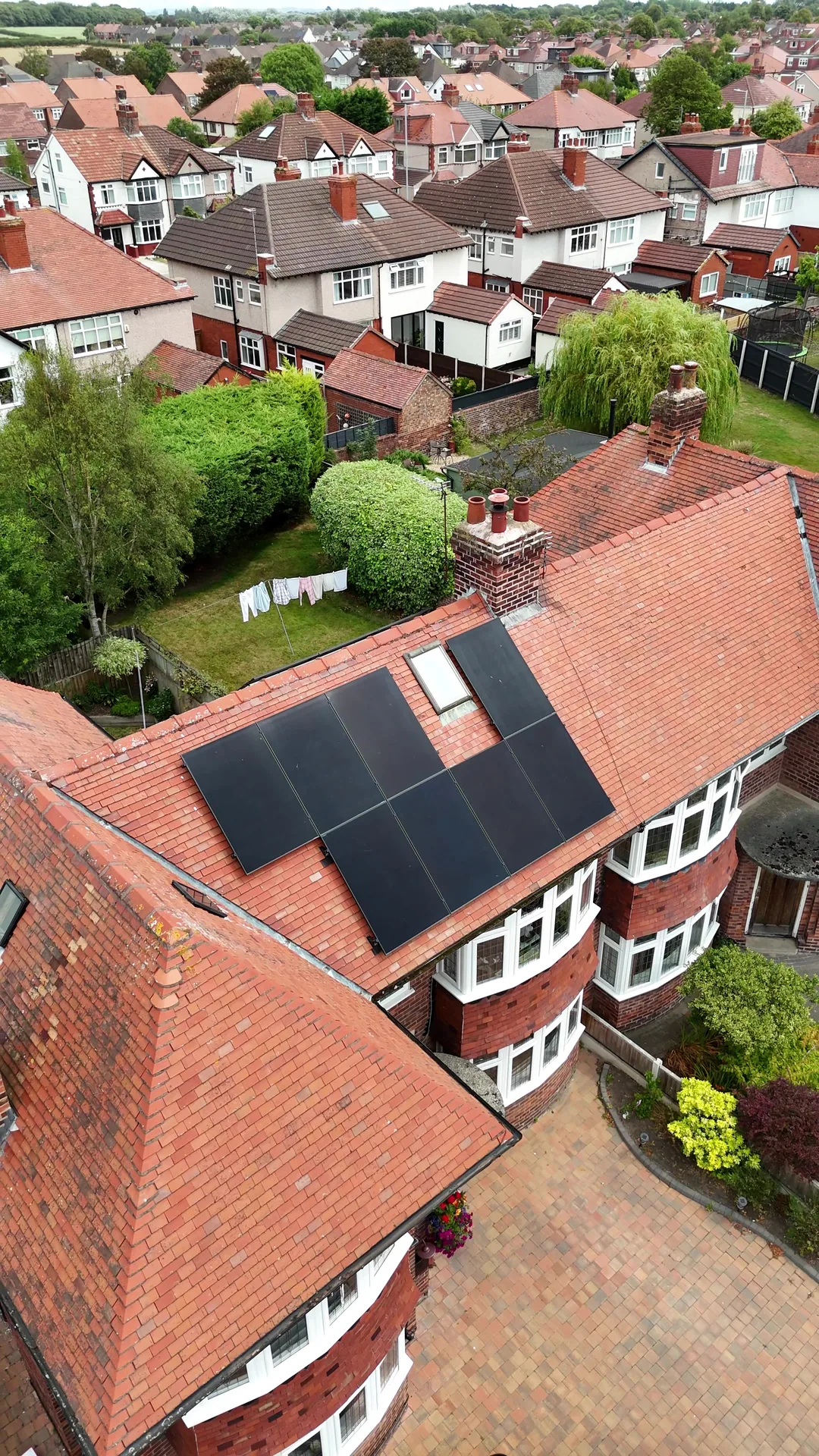
Recent solar installs, from the air
Liverpool Heating solar jobs filmed by drone this summer. Real roofs, real panels, no stock photos.
Read about the four jobs →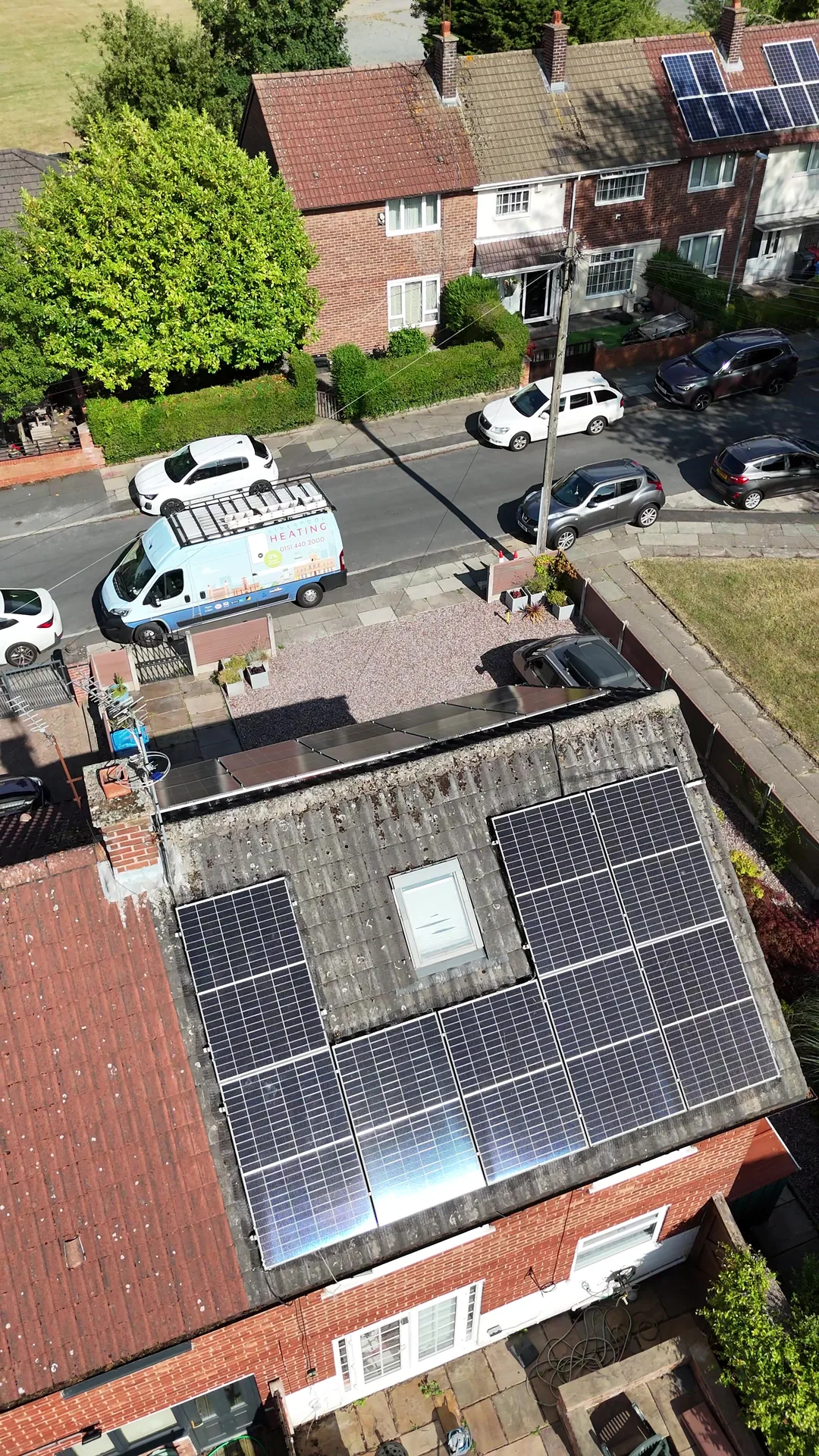
Common questions
Will solar panels improve my home's EPC rating?
Solar PV is counted in an EPC assessment, so it generally improves the rating, and with 54% of St Helens homes at band D or below it is one of the more direct improvements available. How far the rating moves depends on the size of the array and the rest of the house. Insulation and heating also count.
How many panels will fit on a St Helens semi?
Commonly eight to fourteen on the main slope, giving somewhere around 4 to 6 kWp with current panels. Chimney stacks, roof windows and shading reduce that. We size to how much electricity you use rather than to fill the roof, because surplus is exported at a lower rate than you pay to import.
I'm in Rainford with no mains gas. Is solar worth it?
Usually more so than for a gas-heated home, because electricity makes up more of your energy use. If you are running oil or LPG, look at a heat pump at the same time; the two work well together. We will give you the figures for both.
A free solar survey for your St Helens home
Your roof measured, the output modelled and the price in writing. No pressure.
Also in St Helens: boiler installation, boiler service & repair. Solar panels elsewhere: Wirral, Warrington, Southport and Liverpool.