Guide for the Cost of Gas Central Heating Installation
Gas central heating installation costs depend on how much of the system is new. A boiler swap onto existing radiators is one job; a full system with a new boiler, radiators, pipework and controls is a much bigger one. This guide sets out what each costs, what a proper quote should include, and the survey measurements that decide the price, so you can compare quotes like for like.
What it costs, by type of job
Prices depend on the property, but the shape of the job sets the range.
| Job | What is involved | Guide price |
|---|---|---|
| Boiler swap onto an existing system | New boiler in the same place, flush, filter, controls, commissioning | £2,000–£2,850 fitted (our current price list) |
| Full gas central heating, three-bed house | Boiler, radiators, pipework and controls throughout | Around £3,000–£6,000 as a guide |
| Extras priced at survey | New gas run from the meter, boiler moved to another room, back boiler removal, extra radiators | Quoted individually |
Every model we fit and its fitted price is on our boiler prices page. Full-system prices vary more, because the number of radiators, the floors pipework has to cross and how much making good is needed all change the labour.
What a full installation includes
A full gas central heating installation is more than a boiler on the wall. It covers the boiler and its flue; radiators sized to each room; flow and return pipework; thermostatic radiator valves and a room thermostat or smart control; a cleaning flush, a permanent in-line filter and inhibitor; the condensate drain; gas pipework from the meter, tested for tightness and pressure; commissioning with a flue gas analysis and the Benchmark checklist; and notification to Building Control. Ask any installer to confirm each of those in writing. Cheap quotes are cheap because something on that list is missing.
The heat loss calculation
The right boiler and radiator sizes come from a room-by-room heat loss calculation, not a bedroom count. Walls, windows, floors and roof are measured, the construction is taken into account, and the result is a figure in watts for every room. Liverpool's solid-wall Victorian terraces lose heat far faster than a cavity-walled semi of the same size, so the same floor area can need very different radiators. Building Regulations Part L asks for a system to be sized from a proper calculation and not significantly oversized, because an oversized boiler cycles on and off and wastes gas.
Gas supply: the line that surprises people
A modern boiler needs enough gas at full output. BS 6891 allows a maximum 1 mbar pressure drop between the meter and the appliance at full rate, and an old 15mm run that fed a small boiler often cannot carry a new combi's output. Upgrading to 22mm is a common and legitimate line on a quote. It is work for a Gas Safe registered engineer; our gas engineers page explains what that registration covers and how to check it.
Radiators and running temperature
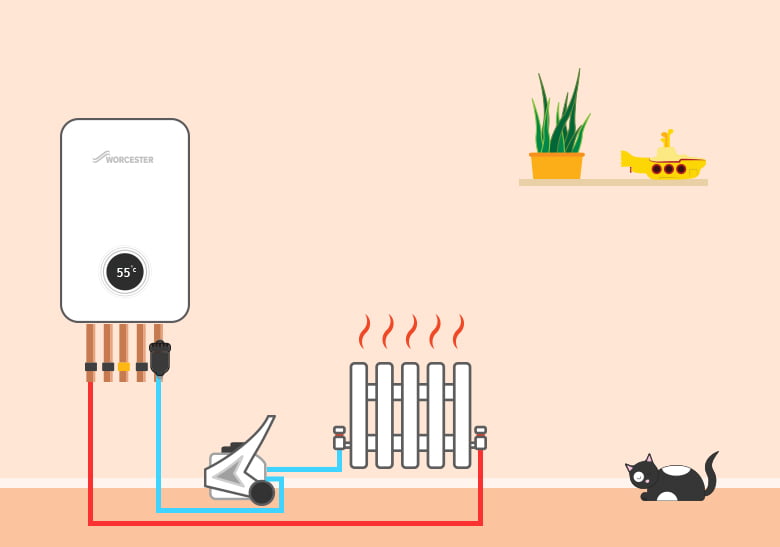
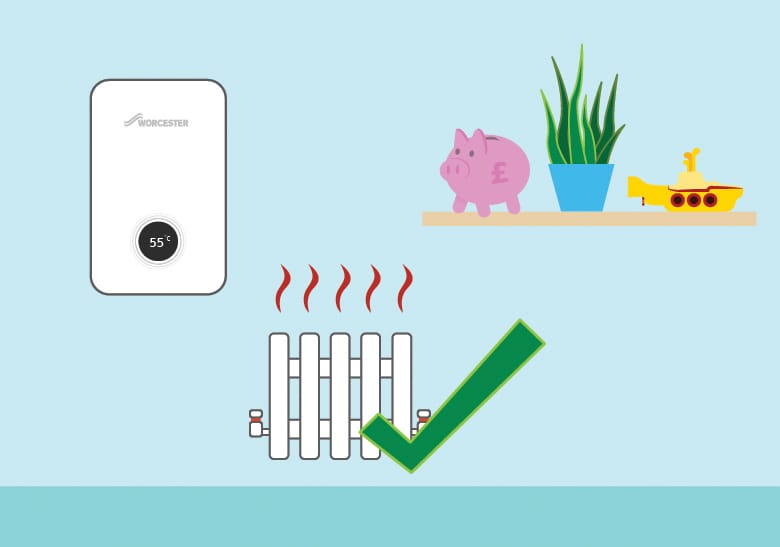
Where a whole system is being installed or replaced in England, Part L asks for it to be designed to run at a flow temperature of 55°C or lower. That suits a condensing boiler, which is only fully efficient when the water coming back to it is cool enough to condense, and it leaves the house ready for a heat pump later without changing every radiator again. In practice it means slightly larger radiators than an old 1980s system had. Our heating engineers size each one to its room.
Combi, system or regular
A combi heats water on demand from the mains, with no cylinder or loft tank, and suits one bathroom and a healthy mains flow. A system boiler stores hot water in a pressurised cylinder and suits two bathrooms used at the same time. A regular boiler keeps a cylinder and tanks in the loft and suits older open-vented systems or weak mains pressure. The survey measures the mains flow rate at the tap with the water running before recommending one.
Controls and zoning
Controls decide how much of the boiler's efficiency you actually get. When a boiler is replaced in England, every room should get thermostatic control, usually TRVs on each radiator, with the room that holds the main thermostat left without one so the two do not fight. A combi in an existing home also needs one further efficiency measure under Part L, such as weather or load compensation or a smart thermostat with automation and optimisation. On a full installation it is worth zoning upstairs and downstairs separately. Our smart heating controls page covers the options.
How long it takes
A boiler swap in the same position is usually a day. A full system takes longer, typically several days for a three-bed house, depending on how many radiators are being fitted, whether floors have to come up and how much making good is needed. You will be told beforehand which days you will be without heating and hot water.
Choosing an installer
Get at least two written quotes that list the same things, and check the installer's Gas Safe registration and the categories of work on their ID card. Ask what is included, what is extra, how long the guarantee is and what it depends on. Finance is available on new installations, subject to status; our finance page sets out how it works. To talk about your own house, our heating engineers in Liverpool can survey it and give you a fixed written quote.
Common questions
How much does gas central heating cost for a three-bed house?
As a guide, a full system with a new boiler, radiators, pipework and controls in a three-bedroom house is around £3,000 to £6,000. A boiler swap onto an existing system is less: our fitted boiler prices run from £2,000 to £2,850. The survey turns either into a fixed quote.
Do I need new radiators with a new boiler?
Not always. Radiators that are in good condition and sized for their rooms can stay, after the system is cleaned and flushed. Corroded radiators, seized valves, or radiators too small to run at a lower flow temperature are priced at survey.
Does gas central heating installation need Building Regulations approval?
Yes, it is notifiable work. A Gas Safe registered installer notifies it through Gas Safe, and you receive a Building Regulations compliance certificate afterwards, so there is no separate application for you to make.
Is it worth installing gas central heating if I might get a heat pump later?
If the system is designed to run at 55°C or lower, as Part L asks for a full system, most of the radiators and pipework can stay when you switch. The boiler is the part that changes.
Updated 15 October 2026