Boiler Making Noise? Kettling Explained
A boiler that has started making noise is usually telling you something specific. Kettling and banging point to restricted flow through the heat exchanger, often sludge or scale. Gurgling points to air or a frozen condensate pipe. Whistling, humming and repeated clicking each have their own causes. Here is how to tell them apart, and which ones need an engineer.
Noises and what they usually mean
| Noise | Usual cause | Who fixes it |
|---|---|---|
| Kettling, rumbling, banging | Water boiling locally in the heat exchanger: sludge, scale or poor flow | Engineer; often a system clean |
| Gurgling | Air in the system, or a frozen condensate pipe in winter | Bleed radiators; thaw the pipe |
| Whistling | Restricted flow, low pressure or a partly closed valve | Check pressure; engineer if it persists |
| Humming or vibration | Pump speed, loose pipework or the fan | Engineer |
| Repeated clicking with no ignition | Ignition trying and failing | Engineer (see fault codes) |
Kettling and banging
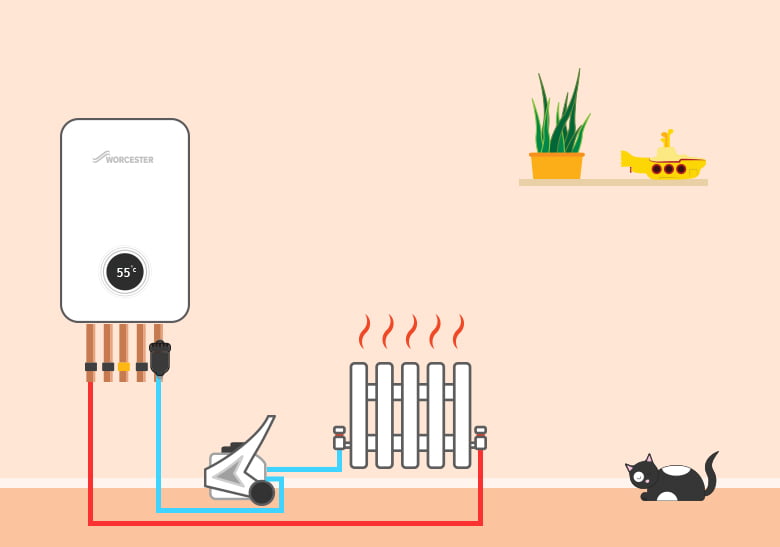
Kettling sounds like a kettle coming to the boil, because that is roughly what is happening: water is overheating in a small part of the heat exchanger where flow is restricted. On Merseyside, with soft to slightly hard water, the cause is more often magnetite sludge from the radiators than limescale. A pump working too hard or a partly closed valve can do the same. Left alone, kettling stresses the heat exchanger. The fix is usually cleaning the system, a powerflush where the sludge is heavy, then a magnetic filter and inhibitor so it does not return.
Gurgling
Gurgling from radiators or pipes is usually air. Bleeding the radiators releases it; check the boiler pressure afterwards, because bleeding lets water out. In cold weather, gurgling from the boiler itself can be the condensate pipe starting to freeze where it runs outside; if the boiler then locks out, thaw the pipe with warm, not boiling, water from the ground. Our guide to radiators not heating up covers bleeding in detail.
Whistling and humming
A high whistle often means water is being forced through a restriction: low system pressure, a partly closed valve or a build-up in the heat exchanger. Check the pressure gauge first. A low hum or vibration usually comes from the pump running at too high a speed, pipework that has worked loose from its clips, or the fan. These are adjustments and repairs for an engineer.
Clicking without lighting
Noise after a new boiler
Some noise in the first days after a new boiler is normal: air released from the water collects in radiators and gurgles until it is bled, and a system that has just been chemically cleaned can take a little while to settle. Persistent kettling, banging or a loud pump on a new installation is not normal, and points to flow, pump speed or a part of the system that was not cleaned. Ring the installer while the work is fresh, because these are commissioning adjustments.
When to get it looked at
Gurgling that bleeding fixes is a five-minute job. Kettling, banging, persistent whistling and humming are worth having checked before they become a breakdown, because they usually mean the boiler is working under strain. Book a boiler repair visit, or mention the noise at your annual service.
Common questions
Why is my boiler making a kettle noise?
That is kettling: water overheating where flow through the heat exchanger is restricted, usually by sludge or scale. It stresses the heat exchanger, so have it checked; cleaning the system usually fixes it.
Is a banging boiler dangerous?
It is not usually an immediate danger, but it means the boiler is working under strain and should be checked. If you also smell gas, leave the property and call the National Gas Emergency Service on 0800 111 999.
Why does my boiler gurgle?
Usually air in the system, which bleeding the radiators fixes, or in cold weather a condensate pipe starting to freeze. If the boiler locks out on a frosty morning, check and thaw the condensate pipe.
Can a powerflush stop a noisy boiler?
If the noise is kettling caused by sludge, yes: clearing the system restores flow through the heat exchanger. A filter and inhibitor afterwards stop it coming back.
Updated 15 October 2026